Reading a restaurant menu that simply lists “chicken” versus one describing “herb-crusted chicken breast with crispy golden skin, nestled on roasted garlic mashed potatoes” creates entirely different experiences. That difference is descriptive writing at work. The second version doesn’t just inform—it transports you to the table, engaging your senses before you’ve ordered.
Most writing guides treat descriptive writing as an academic exercise reserved for English classes. This narrow view misses how description powers everything from marketing emails to business presentations. According to a 2025 Content Marketing Institute study, content with vivid sensory details generates 43% higher engagement than plain factual writing. Whether crafting fiction, composing professional emails, or writing social media posts, descriptive techniques determine whether audiences merely read your words or truly experience your message.
What This Guide Covers
This comprehensive resource goes beyond textbook definitions to provide practical frameworks for mastering descriptive writing across any context. You’ll discover the core techniques that create immersive experiences, learn when description enhances versus overwhelms your message, and gain strategies for avoiding common pitfalls that turn vivid writing into purple prose. Each section includes real examples showing these principles in action. By the end, you’ll write description that transports readers without losing clarity or purpose.
What Descriptive Writing Actually Means
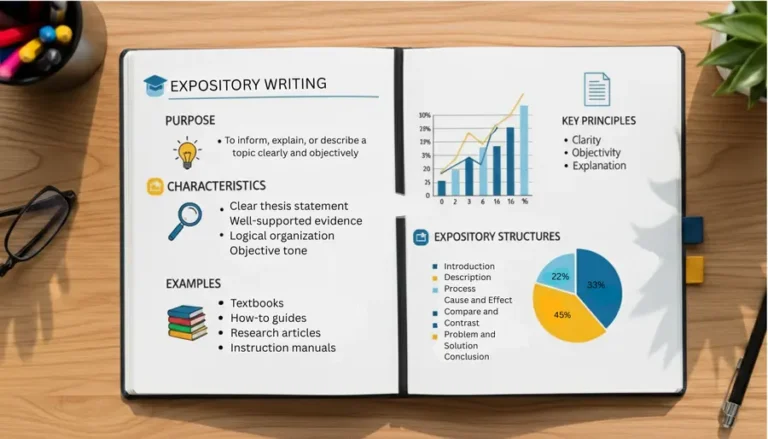
Descriptive writing paints vivid mental pictures through carefully chosen sensory details and precise language. Unlike narrative writing that tells stories or expository writing that explains concepts, description creates immersive experiences by showing readers what something looks, sounds, smells, tastes, or feels like. The goal is transporting audiences into scenes rather than simply informing them about those scenes.
Effective description engages multiple senses simultaneously. Weak writing relies solely on visual details. Strong description incorporates sound, smell, texture, and even taste when relevant. Consider these two descriptions of the same coffee shop: “The coffee shop was busy” versus “Espresso machines hissed and steamed while the rich aroma of dark roast filled the crowded space, conversations buzzing beneath indie folk music.” The second version creates presence through layered sensory details.
The key distinction involves showing versus telling. Telling states facts directly: “She was nervous.” Showing reveals those facts through observable details: “Her hands trembled as she dropped her keys twice while fumbling with the lock.” This difference transforms abstract information into concrete experience readers can visualize and feel. Practicing this shift using simple writing tools helps develop instincts for when to show versus tell.
Descriptive writing appears across genres from fiction to journalism to marketing. Travel writers use it to transport readers to distant locations. Product descriptions employ it to help customers visualize purchases. Even technical writing benefits from occasional descriptive passages that clarify complex concepts through tangible comparisons.
The Five Core Characteristics of Effective Description
Strong descriptive writing shares five essential characteristics regardless of context or genre. Understanding these elements helps you craft description that engages rather than overwhelms.
1. Vivid sensory details
Effective description appeals to sight, sound, smell, taste, and touch. Rather than writing “the room was messy,” describe “clothes draped over chairs, coffee mugs forming rings on papers covering every surface, the stale smell of yesterday’s takeout hanging in the air.” Specific details create clearer mental images than vague generalizations.
2. Precise language
Choose exact words over generic ones. Don’t write “walked”—write “shuffled,” “strode,” or “crept” depending on the specific movement. Don’t describe something as “red”—specify “crimson,” “burgundy,” or “rust.” This precision gives readers clearer pictures without adding word count.
3. Figurative language
Metaphors, similes, and personification connect unfamiliar concepts to familiar ones. “The city never sleeps” personifies an inanimate place. “Her voice was sandpaper against my nerves” creates visceral understanding through unexpected comparison. Use these devices strategically rather than stuffing every sentence with metaphors.
4. Thoughtful organization
Structure descriptions logically. You might organize spatially (left to right, top to bottom), chronologically (how something unfolds over time), or by importance (most striking feature first). Random jumping between details confuses readers. Clear progression guides them through the scene systematically.
5. Purposeful selection
Include only details that serve your larger purpose. Beginning writers often describe everything exhaustively. Skilled writers choose the two or three most telling details that capture essence. If a character’s chipped nail polish reveals her current stress levels, include it. If eye color doesn’t matter to your story, skip it.
Main Descriptive Writing Techniques That Create Immersion
Several specific techniques elevate description from serviceable to memorable. Mastering these tools gives you options for any descriptive situation.
Metaphors
State that one thing is another to highlight shared qualities. “Time is money” suggests both are valuable, limited resources. “Her room was a disaster zone” conveys chaos through comparison to catastrophe. Metaphors work when the comparison illuminates rather than confuses. Avoid mixed metaphors that combine incompatible images.
Similes
Compare using “like” or “as.” They’re more explicit than metaphors but equally powerful. “The building stood like a sentinel over the harbor” or “Her laugh rang out as bright as wind chimes” create clear mental images. Similes give readers familiar reference points for unfamiliar subjects.
Personification
Give human qualities to non-human things. “The wind whispered through the trees” or “Opportunity knocked twice” makes abstract concepts or inanimate objects relatable. This technique creates emotional connection by framing things in human terms we naturally understand.
Sensory language
Ground description in physical experience. Rather than “the garden was beautiful,” write “roses perfumed the air while bees hummed between purple lavender stalks, the sun warming weathered stone paths.” This multi-sensory approach creates presence rather than observation.
Concrete specifics
Replace vague generalities with exact details. Don’t write “many people”—write “forty-three attendees.” Don’t say “old building”—say “1887 brownstone with crumbling mortar.” Numbers, names, and specific details create credibility and clarity. Using organized note-taking during research helps capture these specifics for later use.
How to Structure Descriptive Writing Effectively
Organization determines whether description enhances or muddles your message. Three primary structures work across different contexts.
1. Spatial organization
Move systematically through physical space. Describe a room from left to right, a person from head to toe, or a landscape from foreground to background. This approach works best when physical layout matters to understanding. Art descriptions, architectural writing, and setting establishment benefit from spatial structure.
2. Chronological organization
Follow time sequence. Describe how something changes over hours, days, or seasons. A bakery might be described through its morning routine: pre-dawn dough preparation, sunrise bread baking, mid-morning pastry display arrangement. This structure suits processes, transformations, or events.
3. Order of importance
Prioritize most significant details first. Lead with the most striking, unusual, or essential characteristic, then add supporting details. This works well for character introductions, product descriptions, or any context where readers need the big picture before minutiae.
Choose structure based on your purpose. If describing a crime scene for a mystery novel, spatial organization helps readers visualize evidence placement. If describing a character’s emotional state, order of importance lets you lead with their most telling behavior.
When NOT to Use Descriptive Writing
Knowing when to avoid description matters as much as knowing when to use it. Several contexts require restraint or elimination of descriptive elements entirely.
Technical documentation
Prioritize clarity over immersion. Users troubleshooting software don’t need poetic descriptions of error messages. They need precise, unambiguous instructions. Save description for user-facing marketing materials, not functional documentation.
Formal business communications
Minimize description in quarterly reports, legal documents, and policy memos. These documents state facts directly. Excessive description appears unprofessional or obscures critical information. Brief, strategic description can clarify complex points, but use sparingly.
Action sequences
Fiction action scenes need momentum over atmosphere. During chase scenes or fight sequences, trim description to essential details that maintain pace. Elaborate sensory description slows momentum when readers want rapid progression.
Repetitive descriptions
Don’t describe the same setting exhaustively every time characters enter it. After initial establishment, provide minimal reminders. Readers remember details; constant re-description suggests you don’t trust their intelligence.
The balance between description and other writing modes determines effectiveness. Too much description bogs down even fiction. Too little leaves readers ungrounded. Calibrate based on genre, audience, and purpose.
Common Mistakes and How to Avoid Them
Several recurring errors undermine otherwise capable descriptive writing. Recognizing these pitfalls helps you avoid them.
Purple prose
Overwrought, flowery language draws attention to itself rather than illuminating subject matter. “The luminous orb of celestial radiance ascended majestically” obscures a simple sunrise. Strong writing favors precision over pretension. If removing an adjective doesn’t change meaning, remove it.
Cliché descriptions
Tired comparisons communicate nothing fresh. “White as snow,” “strong as an ox,” and “quiet as a mouse” have been read a thousand times. Find original comparisons that surprise readers while remaining comprehensible.
Telling Instead of Showing
Don’t write “he was angry”—show “his jaw clenched, knuckles whitening as he gripped the table edge.” Observable details let readers deduce emotions rather than being told them directly. This weakens description significantly.
Excessive adjectives
Clutter sentences without adding clarity. “The large, enormous, gigantic, huge building” provides no more information than “the enormous building.” Choose one strong adjective over multiple weak ones. Quality beats quantity.
Neglecting Non-Visual Senses
Most beginning writers describe only what things look like. Including sound, smell, texture, and taste creates richer, more memorable scenes. Challenge yourself to incorporate at least three senses in important descriptive passages.
Practical Exercises for Improvement
Building descriptive skills requires deliberate practice. These exercises develop specific capabilities.
The five senses drill
Describe a familiar location using only one sense per paragraph. Write one paragraph about your kitchen using only sounds, another using only smells, etc. This forces attention to neglected senses and builds sensory vocabulary.
Show don’t tell transformation
Take ten “telling” sentences like “she was tired” and rewrite each as “showing” description revealing the same information through observable details. This builds instincts for choosing concrete over abstract.
Specificity practice
Describe the same object three times, making each version more specific. First draft: “a car.” Second draft: “a sedan.” Third draft: “a 2019 silver Honda Accord with a dented rear bumper and faded dealership sticker.” This trains precision.
Purple prose revision
Deliberately write the most overwrought, excessively flowery description possible. Then ruthlessly edit it down to clean, effective prose. This exercise in extremes helps calibrate balance. Practice these exercises using distraction-free writing environments that let you focus purely on craft.
Frequently Asked Questions About Descriptive Writing
Developing Your Descriptive Voice
Descriptive writing is a skill that improves through conscious practice and wide reading. Study how your favorite authors create atmosphere and presence. Notice which senses they engage most frequently. Observe how they balance description with dialogue and action. Then experiment with those techniques in your own work using accessible writing tools that remove technical barriers.
Start with small additions to your current writing. Add one sensory detail to your next email. Include one fresh metaphor in your upcoming presentation. Replace three generic adjectives with precise alternatives in your latest blog post. These incremental improvements compound over time into substantial capability.
Remember that effective description serves your reader’s experience, not your ego. Every word should earn its place by adding clarity, emotion, or understanding. When in doubt, cut rather than add. The goal isn’t flowery language—it’s transporting your audience to exactly where you want them to be.
What scene from your life would you describe differently after reading this guide?